

Mountain Training Courses
Our inclusive Rock Skills, Hill Skills, Mountain Skills and Indoor Climbing Assistant courses are accessible to everyone.
See our Mountain Training courses and further information listed below. Get in touch if you need more information and see a list of our course upcoming dates here.
Rock Skills Introduction
The Mountain Training Rock Skills courses are designed to provide structured training opportunities for people who want to learn more and become independent climbers. There are three different levels so that complete beginners and those with more experience can choose the most appropriate starting point.
The one day Rock Skills Introduction course is ideal for beginner climbers; those who have never climbed on rock and those with limited experience of climbing indoors. No previous experience is necessary as the course is designed to teach you the basics.
We are familiar with working with a variety of needs and ensuring that our courses are participant centred.
The course is designed to give you a good taster to climbing outside and will cover the following topics:
Background and planning: including the use of guide books;
Climbing skills: including fundamental movement skills and climbing styles;
Footwear and equipment;
Technical skills: including tying in, belaying, spotting and abseiling;
Environmental knowledge;
Hazards and emergency procedures.
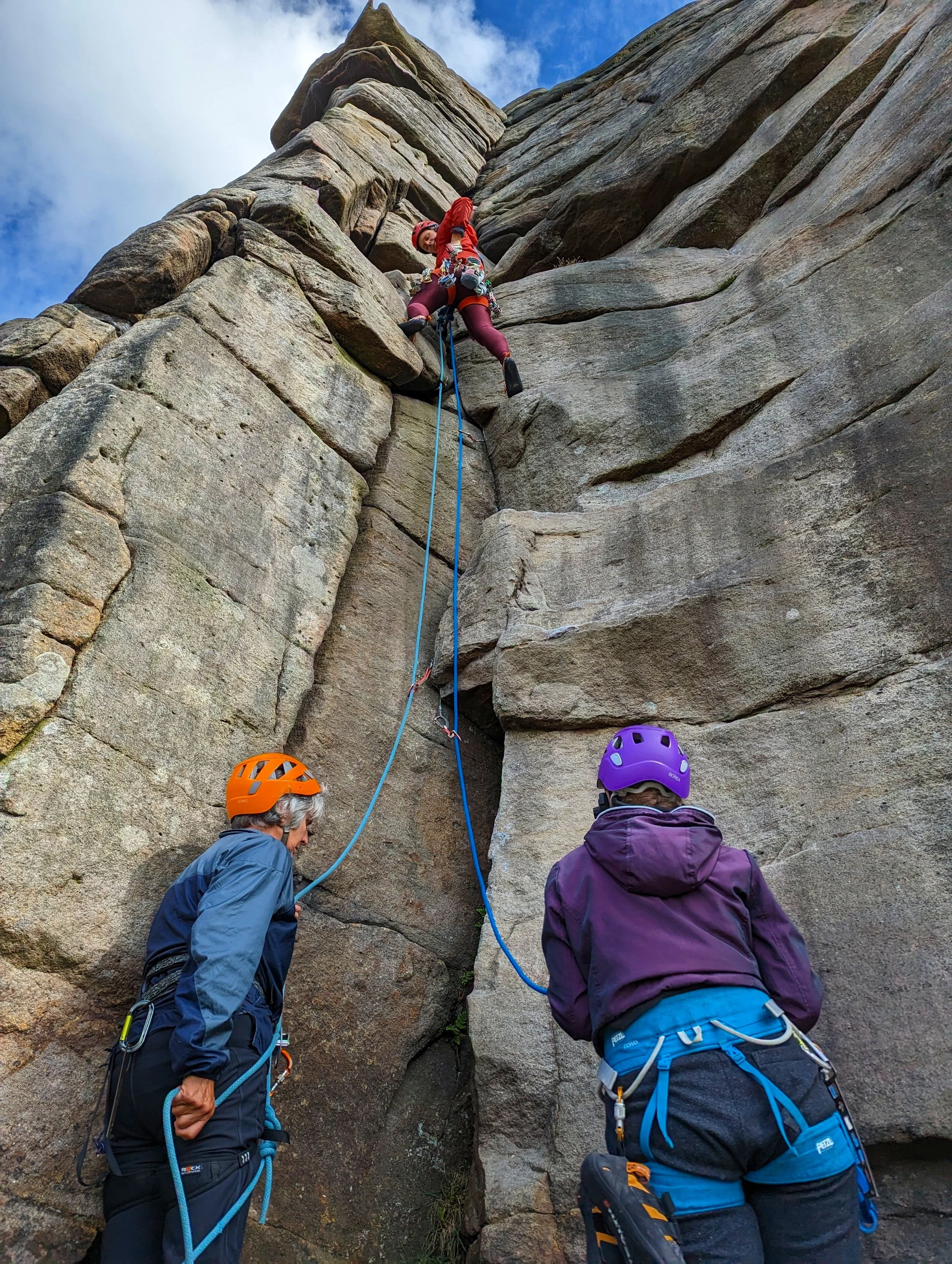
The Mountain Training page here https://www.mountain-training.org/skills-courses/rock-skills-introduction/ gives further details of the course itself and its benefits.
Rock Skills Intermediate
The Mountain Training Rock Skills courses are designed to provide structured training opportunities for people who want to learn more and become independent climbers. There are three different levels so that complete beginners and those with more experience can choose the most appropriate starting point.
The two day Rock Skills Intermediate course is for those that already have some climbing experience and want to learn how to become a competent second. The main aims of this course are to learn how to be a safe belayer, how to second routes competently and how to belay a lead climber. You will develop your climbing movement skills and learn how to place protection and construct belays.
We are familiar with working with a variety of needs and ensuring that our courses are participant centred.
The course will cover the following topics:
Background and planning: choosing a suitable venue, how to use guidebooks, crag etiquette and the work of the mountaineering councils.
Climbing skills: warming up and injury avoidance, developing your movement skills and widening your repertoire of climbing moves.
Footwear and equipment: rock boot fit, selecting the right equipment for improved performance, and an introduction to climbing protection.
Technical skills: building anchors, selecting runners, rope work, belaying, holding falls, lowering, seconding a route and personal abseiling.
Environmental knowledge: the impact of climbers at the crag, ethics, access and environmental considerations.
Hazards and emergency procedures: identifying hazards, managing risk when climbing, abseiling and bouldering. Understanding common injuries, how to get help and the role of Mountain Rescue.
The Mountain Training page here https://www.mountain-training.org/skills-courses/rock-skills-intermediate/ gives further details of the course itself and its benefits.
Rock Skills Learn to Lead Sport
The two day Learn to Lead Sport course will provide you with the skills you need to participate in bolted sport climbing, including an introduction to leading bolt protected climbs. This course is also ideal if you are ready to progress to leading sport routes outside, if you are looking to improve your lead climbing confidence or refresh your leading skills in the context of sport climbing.
We are familiar with working with a variety of needs and ensuring that our courses are participant centred.
The course will cover the following topics:
Background and planning: choosing a suitable venue and route, how to use guidebooks, crag etiquette, the importance of the climbing partnership and the work of the mountaineering councils.
Climbing skills: safe and assured movement on the lead and optimising natural rests for clipping bolts.
Equipment: ropes and technical equipment for sport climbing.
Technical skills: fixed equipment, anchors, rope work, belaying, holding/taking falls in a controlled environment, lowering, lower offs and abseiling.
Environmental knowledge: the impact of climbers at the crag, ethics, access and environmental considerations.
Hazards and emergency procedures: identifying hazards, decision making and managing risk when climbing, understanding common injuries, what to do in the event of an incident, managing common problems, how to get help and the role of Mountain Rescue.
The Mountain Training page here https://www.mountain-training.org/skills-courses/rock-skills-learn-to-lead-sport-climbs/ gives further details of the course itself and its benefits.
Rock Skills Learn to Lead Trad
The two day Learn to Lead Trad course will provide you with the skills you need to participate in traditionally (trad) protected climbing, including an introduction to leading simple trad climbs. This course is also ideal if you are looking to improve your confidence, refresh your personal trad leading skills with the aim of helping you to become an independent climber and for candidates planning to complete the Rock Climbing Instructor Scheme.
We are familiar with working with a variety of needs and ensuring that our courses are participant centred.
The course will cover the following topics:
Background and planning: choosing a suitable venue and route, how to use guidebooks, crag etiquette, the importance of the climbing partnership and the work of the mountaineering councils.
Climbing skills: safe and assured movement when leading climbs and optimising natural rests for placing gear.
Equipment: ropes and technical equipment for lead climbing, contents of a lead rack and how to carry it, selection and function of gear.
Technical skills: selection and placement of suitable gear to protect leader and second, choosing anchors, effective ropework, attaching to multiple anchors, belaying, holding leader and second falls in a controlled environment.
Environmental knowledge: the impact of climbers at the crag, ethics, access and environmental considerations.
Hazards and emergency procedures: identifying hazards, decision making and managing risk when climbing, understanding common injuries, what to do in the event of an incident, managing common problems, how to get help and learning how Mountain Rescue works.

The Mountain Training page here https://www.mountain-training.org/skills-courses/rock-skills-learn-to-lead-trad-climbs/ gives further details of the course itself and its benefits.
Hill Skills
The two day Mountain Training Hill Skills course is your key to getting started in countryside and moorland walking. There is no experience of hill walking required to attend a Hill Skills course because the content of the course is aimed at beginners. If you do have some experience of hill walking but aren’t confident about planning walks, navigating and understanding the equipment required, then the Hill Skills course is an ideal way to learn.
For those wanting to do their Lowland Leader qualification, completing the Hill Skills course is an alternative to logging 10 days of walking as a pre-requisite to registering for the scheme.
We are familiar with working with a variety of needs and ensuring that our courses are participant centred.
The course will cover the following topics:
Planning: how to successfully plan a hill walk in the UK or Ireland.
Walking skills: what things should you consider while out walking and what can make life easier (pace, nutrition, movement skills).
Clothing and equipment: being suitably dressed and equipped can make the difference between a great day out and a complete disaster.
Weather: how it affects the hills and your day out.
Navigation in the hills: everything from selecting a compass to navigation strategies and an intro to GPS.
Environmental knowledge: how to minimise your impact on the hill and information on good practice and useful organisations.
Hazards and emergency procedures in the hills: how to respond to any hazards you encounter and what to do in an emergency.
The Mountain Training page here https://www.mountain-training.org/skills-courses/hill-skills/ gives further details of the course itself and its benefits.
Mountain Skills
The two day Mountain Training Mountain Skills course is a great opportunity to learn more about looking after yourself in steep rocky places, where the scenery is breathtaking and weather changeable. Some previous hill walking is required, and a reasonable level of fitness.
We are familiar with working with a variety of needs and ensuring that our courses are participant centred.
The course will cover the following topics:
Planning: how to successfully plan a walk in the mountains in the UK or Ireland.
Walking skills: what things you should consider while out walking and what can make life easier (pace, nutrition, movement skills, steep ground).
Clothing and equipment: being suitably dressed and equipped can make the difference between a great day out and a complete disaster.
Weather: how it affects the mountains and your day out.
Navigation in the mountains: everything from selecting a compass and using a map, to navigation in poor visibility and an intro to GPS.
Environmental knowledge: how to minimise your impact on the mountain, information on good practice and useful organisations.
Hazards and emergency procedures in the mountains: how to respond to any hazards you encounter and what to do in an emergency.
The Mountain Training page here: https://www.mountain-training.org/skills-courses/mountain-skills/ gives further details of the course itself and its benefits.
Indoor Climbing Assistant
The Mountain Training Indoor Climbing Assistant qualification is for those with competence in the basic skills of climbing who wish to assist qualified climbing instructors and coaches in the management of their sessions. Indoor Climbing Assistants are assessed as being competent in their role supporting qualified instructors and coaches but are not qualified to manage groups independently.
Indoor Climbing Assistants can have an inspirational effect on individuals, groups and communities. They work with participants and a range of others such as instructors, other climbing assistants, colleagues, volunteers, parents, teachers, youth workers and health professionals to ensure the climbing experience is the very best it can be.
We are big supporters of the Indoor Climbing Assistant qualification in developing and recognising our climbers’ skills.
Candidates must be at least 16 years old, must be competent in the basic skills of belaying, harness fitting and tying on, and have logged at least 5 indoor or outdoor climbing sessions.
The course involves a minimum of 6 hours contact time, and candidates will be trained and continuously assessed on the knowledge and skills required.

The Mountain Training page here https://www.mountain-training.org/england/scheme-information/indoor-climbing-assistant-info/ gives further details of the qualification and is essential reading for candidates.

